

Designing a night light using power from simple electrochemicalbatteries
Thanh-Dung Nguyen,
Head of STEM Club, Nguyen Trung Truc 1 High School, AnGiang province
Recently, on 11th December 2025, the Chemistry-BiologyDepartment of Nguyen Trung Truc 1 High School presented an exciting andbeneficial STEM experiential activity with the theme: “Designing a Night LightUsing Power from Simple Electrochemical Batteries.” This activity not onlyhelps students explore Chemistry and Physics in greater depth through practicalexperiments, but also stimulates creative thinking, design skills, and theapplication of knowledge to real-life situations.
* From Theory to Practice: UnderstandingElectrochemical Batteries
The main content of the activity is ElectrochemicalBatteries, also known as Voltaic Batteries. Students are provided withfundamental knowledge about the operating principle of the battery: oxidationat the negative electrode (anode) and reduction at the positive electrode(cathode) create a flow of electrons, generating electrical energy. However,instead of using commercial batteries, the students got to try their hand atcreating their own power sources using familiar, readily available materials.The student groups combined different metal electrode pairs, such as Copper(Cu), Zinc (Zn), Aluminum (Al), and common electrolytes like salt solution,citric acid solution (from lemons/limes), or even vinegar. This is wherechemistry theory was literally "illuminated." Students directlyobserved and calculated how to connect these simple batteries into a completecircuit, generating enough voltage to power a small LED light. The differencein the standard electrode potential of the metals determined the voltage ofeach "homemade battery."
* Design Challenge: Creating a Night Light
The most exciting part of the experience was thechallenge of designing and assembling a night light. Each group focused notonly on generating electricity but also on ensuring the aesthetics andfunctionality of the final product.
- Circuit Calculation: Students had to carefully calculate how many"lemon batteries," "vinegar batteries," or "saltbatteries" to connect in series to achieve the minimum voltage(approximately 1.5 – 3V) required for the LED light.
- Structural Design: Materials such as cardboard, recycled plasticbottles, wooden sticks, etc., were used to create the lamp frame. The designswere diverse, ranging from simple, whimsical shapes to more complex models,showcasing the creativity and ingenuity of the students.
- Presentation and Presentation: The completed product was presented by the groups,explaining the operating principle of the electrochemical battery used, thedesign process, and the feasibility of this "green" night light.
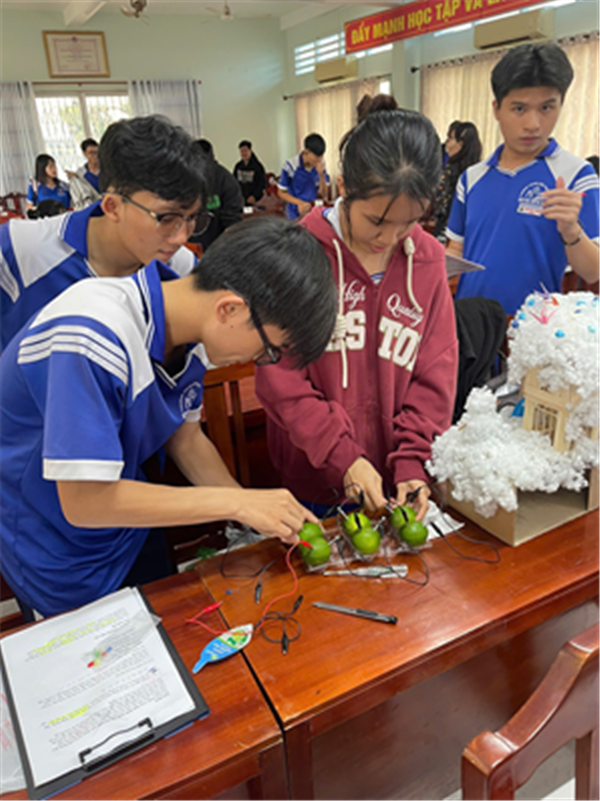
Students designing STEM products
* The Spreading Significance of STEM
The activity was a resounding success, not onlybecause of the unique nightlights powered by self-generated electricity, butalso because of the values it brought:
- Connecting knowledge: Conveying chemical concepts (oxidation-reductionreactions) and physics concepts (electrical circuits, voltage) in a visual andeasy-to-remember way.
- Encouraging critical thinking: Students had to experiment multiple times, adjustingmaterials, electrolyte concentrations, and connection methods to optimizebattery performance.
- Promoting environmental awareness: The use of recycled and environmentally friendlymaterials to manufacture the battery and lamp frame contributed to educatingstudents about sustainable development./.